
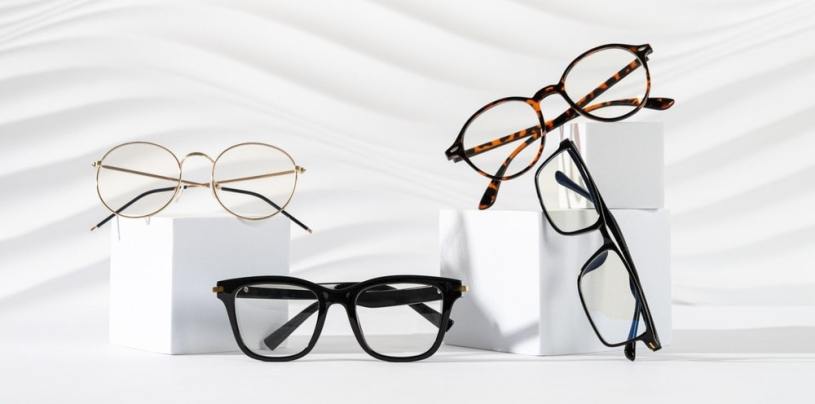
Cast your mind back to a time before spectacles were a ubiquitous sight. For centuries, blurry vision was simply a fact of life for many, especially as they aged. Fast forward to today, and glasses are not just essential medical devices; they’re bona fide fashion accessories, gracing the runways, shaping celebrity looks, and becoming a powerful means of personal expression. It’s been quite a journey, transforming from mere “eye-helpers” into objects of desire. Let’s take a whirlwind tour through the fascinating evolution of eyewear.
The Early Days: A Monocle, a Monk, and a Mystery
The exact invention of eyeglasses is a bit hazy, shrouded in the mists of medieval Italy, sometime in the late 13th century. Scholars often credit Salvino D’Armate or Alessandro della Spina around the 1280s for their invention. Imagine the sheer wonder and relief for aging monks and scribes who suddenly found their eyesight, and thus their livelihood, restored!
Early glasses were rudimentary: two convex lenses (for farsightedness) set into bone, metal, or leather frames, often held up to the eyes or balanced precariously on the nose (the “rivet spectacles”). They were a tool of scholarship, a symbol of wisdom and learning, largely confined to the educated elite. For centuries, they remained functional, utilitarian objects, often clunky and uncomfortable.
The Renaissance & Beyond: Slow but Steady Progress
As printing became widespread and literacy increased, so did the demand for vision aids. The 15th century saw the introduction of more sophisticated frame materials and designs. In the 17th century, Spanish spectacle makers began attaching ribbons of silk or string to the frames, which could be looped over the ears to keep glasses from falling off – a precursor to modern temples!
By the 18th century, the first true “temples” (the arms that extend over the ears) began to appear, attributed to British optician Edward Scarlett. This was a game-changer for comfort and stability. The introduction of bifocals by none other than Benjamin Franklin in the late 18th century marked another huge leap, allowing one pair of glasses to serve for both distance and reading. Glasses were becoming more practical and more widely accessible, though still primarily seen as medical prosthetics.
The 20th Century: The Dawn of Fashion Eyewear
The 20th century is where things really get interesting.
- Early 1900s: Eyewear remained fairly conservative, often round or oval, made of steel, gold, or horn. Frames were still mostly functional, designed to be inconspicuous.
- 1930s-1940s: Enter Hollywood! Movie stars began wearing glasses that were not just for sight but for character. The Aviator, originally designed for pilots (as we discussed in a previous article!), became a symbol of daring and cool. Other styles like the “P-3” (a rounder, keyhole bridge design) gained popularity.
- 1950s: The Rise of Boldness & Cat-Eye: Post-war prosperity and a new emphasis on personal style saw a dramatic shift. Eyewear became a deliberate fashion choice. The cat-eye frame emerged, celebrated for its upswept, feminine lines, adorning the faces of icons like Marilyn Monroe and Audrey Hepburn. These were bold, often embellished frames that screamed glamour. For men, thick, dark horn-rimmed frames (like the Wayfarer) became a symbol of intellectual cool and rebellion.
- 1960s-1970s: Large & Leisurely: The counter-culture movement brought with it oversized, often round or square frames, in a wider array of colours and materials. Think John Lennon’s iconic round specs or the large, colourful frames of the disco era. Eyewear was about making a statement, embracing individuality, and sometimes, hiding behind large lenses.
- 1980s: Brand Power & Return of Classics: The Wayfarer made a huge comeback thanks to savvy marketing and product placement in films. Designer brands such as Gucci began producing frames, turning glasses into luxury accessories. More experimentation with vibrant colours and angular shapes.
- 1990s-2000s: Minimalism & Technology: Narrower, minimalist frames dominated the early 90s, often rimless or semi-rimless. As the century turned, technological advancements brought lighter materials (titanium) and digital lens designs, making eyewear even more comfortable and effective.
Today: Unprecedented Choice & Personalization
We are living in a golden age of eyewear.
- Diversity: Every style from every decade is accessible and considered “in.” From vintage-inspired frames to cutting-edge futuristic designs, there’s a frame for every face and every personality.
- Materials: Innovation continues with lightweight titanium, durable bio-acetates, recycled plastics, wood, carbon fiber, and even 3D-printed frames.
- Customization: Many brands offer bespoke services, virtual try-ons, and a vast array of lens coatings and tints, allowing for unparalleled personalization.
- Function & Fashion Merge: Eyewear seamlessly blends medical necessity with high fashion. It’s not about hiding your glasses anymore; it’s about showcasing them as a deliberate and essential part of your style.
The journey from a simple, clunky tool for sight to a highly sophisticated and deeply personal fashion statement reflects humanity’s relentless pursuit of both function and beauty. So, the next time you put on your glasses, take a moment to appreciate the centuries of innovation that have transformed them into the stylish, essential accessory they are today. They’re more than just glass and plastic; they’re a testament to how far we’ve come in helping us see the world, and be seen in it, with clarity and style.
 Online Trends Fashion Blog